
Until recently, the power industry’s default answer to almost every question was to wait on the grid.
Need more capacity? Apply for an interconnection and wait, maybe two years, maybe five. Need backup power? Install a diesel generator and hope you never need it. Need to control costs? Good luck; you’re priced at whatever the utility decides.
For decades, waiting on the grid was an acceptable answer because the alternatives were limited. But the industries driving today’s economy—AI infrastructure, advanced manufacturing, and data-intensive operations—don’t have the luxury of waiting, and they can’t afford to accept only what the grid delivers. The gap between what traditional utility infrastructure offers and what high-demand industries need is where Liberty Power Innovations comes in.
Power as a Purpose-Built System
The old model treats power as something you receive. You connect to the grid, pay the rate, and manage around whatever reliability and capacity you get. The infrastructure that generates and delivers that power is invisible and outside of your control.
LPI’s model is fundamentally different. We build, own, and operate the energy infrastructure our customers depend on, which means we’re not handing off a connection and walking away. We’re responsible for what happens every hour of every day—the generation, the fuel supply, the monitoring, the optimization, and the maintenance.
That’s what “orchestrate” means to us. We go beyond just generating power by custom-building the full system and managing it to deliver reliable, cost-stable energy at scale.
The Foundation: Generation You Control
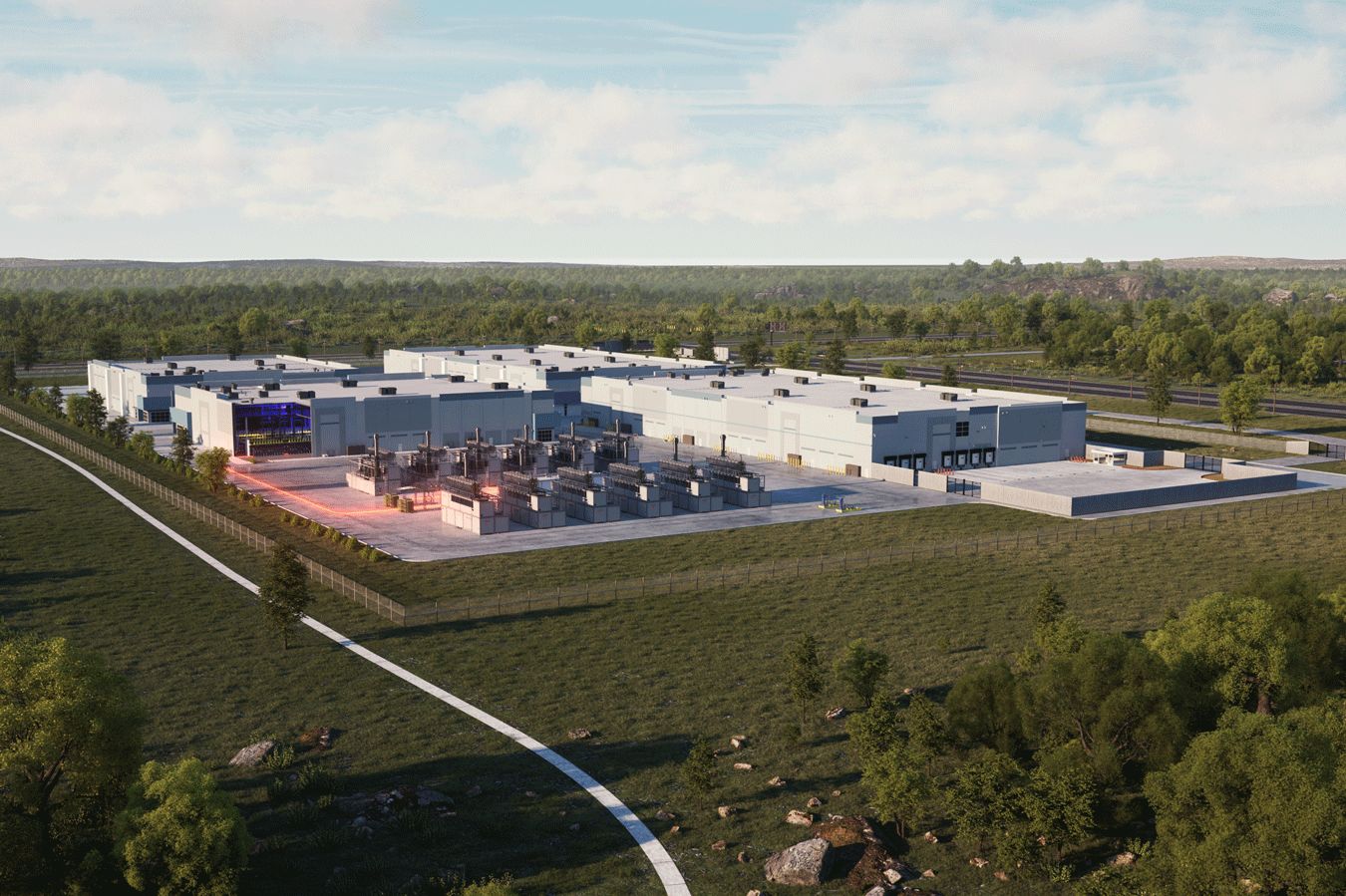
Everything starts with a baseload of generation that’s right-sized for your needs. LPI’s Forte service is a scalable natural gas generation designed to deliver utility-grade reliability on-site as a primary power source capable of carrying a full baseload.
Now on our fourth-generation design—and with over a decade of development, construction, operations, and maintenance experience—LPI’s modular power blocks are largely constructed off-site and scale up to 1+ GW as demand grows. Our phased construction process brings capacity online in as little as 12 months, meaningfully faster than the multi-year timelines typically required by utility interconnection queues.
The Forte system is built for the resilience your operations demand, with load-following capability and black start readiness. For industries that can’t wait and can’t afford downtime, Forte solves both problems at once.
Smarter Power Once the Grid Arrives
Other power strategies treat grid interconnection as the finish line, but LPI views it as an opportunity to choose the best-priced power source at any given moment.
Once a site establishes a grid connection, Chorus, LPI’s power and grid optimization service, is designed to actively manage the relationship between on-site generation and grid power in deregulated markets. The logic is straightforward: when grid prices are low, draw from the grid. When grid prices rise above the cost of on-site generation, dispatch the asset. This make-versus-buy choice is repeated continuously at a five-minute cadence.
The modeled outcome of Chorus’s continuous optimization is a blended $/kWh rate designed to match or improve on grid power alone, with the added benefit of on-site reliability that the grid can’t guarantee. Combining Forte and Chorus yields a framework for delivering cost stability and resilience simultaneously.
Managing the Load, Not Just the Supply
For AI infrastructure and advanced compute environments, the challenge is more complex. AI workloads are uniquely volatile with near-instantaneous load swings that can destabilize a system that isn’t designed to handle them.
Tempo, LPI’s intelligent load management service, coordinates the power system’s response to changes in demand. It coordinates rotational generation, inverter-based resources such as batteries, and kinetic support in real time to absorb transient demand and maintain voltage and frequency stability under conditions that would overwhelm a simpler setup.
Tempo was developed from real engineering experience building an electric frac fleet and ensuring that equipment could manage the extreme transient conditions inherent to frac. That background shapes the system design, anticipating and managing load before instability occurs.
Integrated Fuel Supply
Reliable power requires reliable fuel, and LPI delivers both. We manage the full natural gas supply chain from physical pipeline interconnections and infrastructure development to gas procurement, transportation, storage, and real-time scheduling and balancing. LPI coordinates every fuel element for onsite generation into a single, integrated solution.
Reliable generation requires reliable fuel. For operators in locations where pipeline access may be limited, fuel supply can become the constraining variable. LPI can integrate our natural gas and CNG services to secure the fuel supply that’s necessary to run generation.
Adding fuel supply service with LPI means end-to-end supply chain management, ensuring fuel supply meets engine and demand specifications.
What This Actually Looks Like
For a data center operator looking to bring a new campus online ahead of utility timelines, LPI’s model is designed to provide generation capacity that’s custom-tailored to each site. We’re baseload power in the window between groundbreaking and grid access. Once the grid connection is established, we continue to provide backup and grid-optimized generation, making the asset even more valuable.
For an AI infrastructure operator managing power-intensive training workloads, the combination of reliable generation, intelligent load management, and on-site fuel supply is designed to address the full complexity of the problem.
The future of power for high-demand industries isn’t about finding a better version of the old model. It’s about building something different from the ground up— infrastructure that’s designed to respond and scale alongside the technologies it supports.